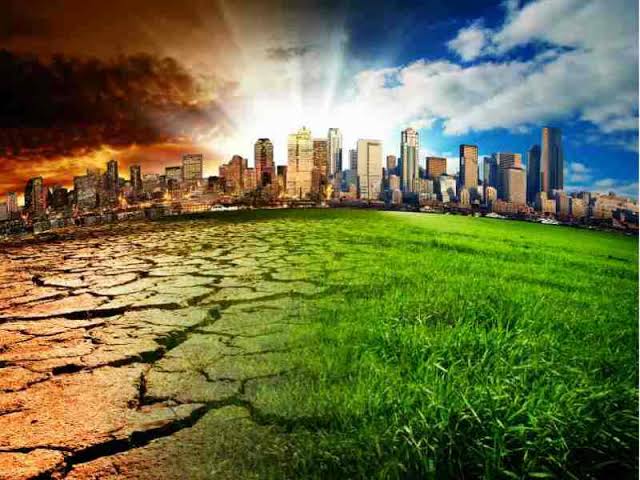
Global warming
Introduction
Global warming refers to the long-term rise in the average temperature of the Earth’s climate system. It is primarily caused by increasing levels of greenhouse gases, such as carbon dioxide, in the atmosphere, which trap heat and cause the planet to warm.
This warming trend is projected to continue into the future, leading to a range of impacts, including rising sea levels, more frequent and intense heat waves, and changes to ecosystems and weather patterns.

Fig1.1 Global Warming
Facts of global warming
- The Earth’s average surface temperature has risen about 1.8° F (1.0°C) since the late 1800s and about 0.9°F (0.5°C) in the last three decades.
- The past few decades have been the warmest on record, and the year 2020 is one of the three warmest years on record.
- Greenhouse gases, such as carbon dioxide, methane, and nitrous oxide, trap heat in the atmosphere and cause the planet to warm up. The levels of these gases have risen significantly since the industrial revolution, primarily due to human activities, such as the burning of fossil fuels and deforestation.
- The melting of glaciers and ice caps is causing sea levels to rise, which can lead to coastal flooding and erosion.
- Changes in temperature and precipitation patterns are leading to more frequent and intense heatwaves, droughts, and hurricanes.
- The warming trend is projected to continue into the future, potentially leading to even more severe impacts on the environment and human societies.
- The overwhelming majority of climate scientists agree that global warming is happening and is primarily caused by human activities.
Causes of global warming
- The primary cause of global warming is the increase of greenhouse gases in the atmosphere, primarily carbon dioxide, methane, and nitrous oxide.
- These gases trap heat from the sun and warm the planet’s surface, leading to global warming.
- The main source of these greenhouse gases is human activities, such as the burning of fossil fuels for energy and transportation, deforestation, and agriculture.
- Additionally, the use of industrial processes, such as cement production, also contribute to the emission of greenhouse gases.
- Other factors, such as volcanic eruptions, changes in solar radiation, and variations in the Earth’s orbit.
- It also play a role in global warming, but human activities are the dominant factor causing the current trend.
Greenhouse effect
- The greenhouse effect is a natural process that occurs when certain gases in the Earth’s atmosphere, such as carbon dioxide, methane, and nitrous oxide, trap heat from the sun.
- These gases are known as greenhouse gases because they act like a greenhouse, trapping heat and keeping the planet warm enough to support life.
- When the levels of greenhouse gases increase, they trap more heat and cause the planet to warm up. This is known as the enhanced greenhouse effect, and it is what is causing global warming.
- Human activities, such as the burning of fossil fuels and deforestation, are releasing large amounts of greenhouse gases into the atmosphere, causing the enhanced greenhouse effect and leading to global warming.
- The warming trend is projected to continue into the future unless action is taken to reduce greenhouse gas emissions and mitigate their effects.
Effect of global warming on African youth
Global warming affects African youth in many ways, including:

Pic 1.2 Climate change in African State
1. Climate Change Impacts
The impacts of climate change, such as heatwaves, droughts, and floods, are affecting African countries disproportionately, disrupting agriculture and putting food security at risk.
2. Health Concerns
Climate change is also affecting the health of African youth, with increasing incidence of diseases such as malaria and dengue fever.
3. Migration:
Climate change is leading to displacement and migration of communities, particularly in rural areas, as droughts and famine increase.
4. Economic Disadvantages
Climate change can also have significant economic consequences, such as reducing economic opportunities and increasing poverty, which is particularly damaging for African youth who already face significant challenges.
However, African youth can also play a key role in addressing the challenge of climate change by engaging in activism, developing sustainable technologies, and promoting environmental education.
Future Global warming solutions in African
Solving global warming in Africa in the future will require a comprehensive approach that addresses the root causes of greenhouse gas emissions and the impacts of climate change on communities and ecosystems.

Pic 1.3 Climate Change in Africa
Some of the key solutions include:
1.Promoting Renewable Energy
Encouraging the development and use of renewable energy sources, such as solar, wind, and hydro power, can help reduce greenhouse gas emissions and promote energy independence.
2.Improving Energy Efficiency
Improving energy efficiency, through measures such as retrofitting buildings, and promoting the use of energy-efficient appliances, can help reduce energy use and greenhouse gas emissions.
3. Supporting Sustainable Agriculture
Supporting sustainable agriculture, including promoting agroforestry and conservation agriculture practices, can help reduce greenhouse gas emissions, conserve natural resources, and improve food security.
4.Protecting Forests
Protecting and restoring forests, including promoting sustainable forestry practices and reducing deforestation and forest degradation, is essential for mitigating climate change and preserving biodiversity.
4. Adapting to Climate Change
Preparing for and adapting to the impacts of climate change, including improving water management and enhancing coastal protection, is crucial for protecting communities and ecosystems.
5. Promoting Climate-Smart Development
Encouraging climate-smart development, including promoting low-carbon and resilient infrastructure and integrating climate considerations into economic decision-making, is essential for reducing greenhouse gas emissions and mitigating the impacts of climate change.
Implementing these solutions will require significant investment, cooperation, and international support, but they hold great potential for mitigating the effects of climate change in Africa and promoting sustainable development.
 Health Science Forum